Water Ponding for Days
- You See
- Dirt rings and algae marks across the field.
- What It Means
- Low spots sit below the drain. Tapered insulation or a lowered sump moves water to the outlet.
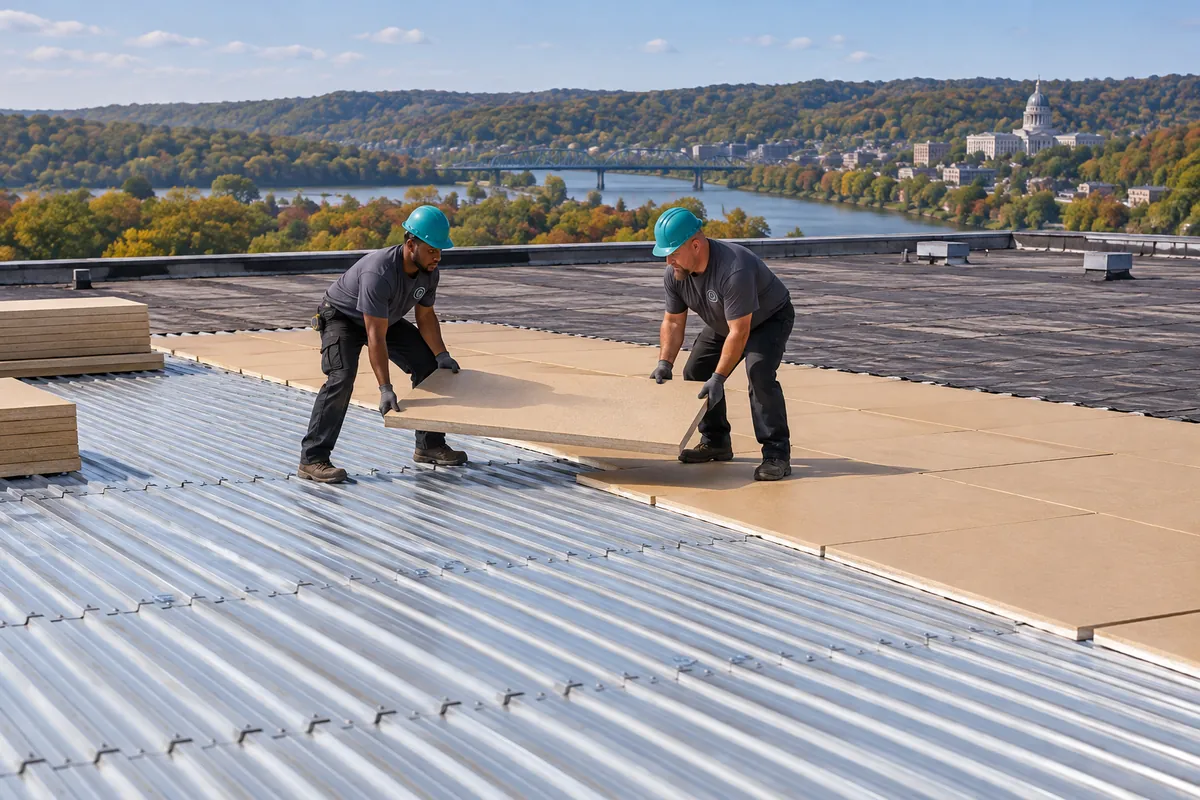
As a Frankfort flat roofing contractor, we replace and rebuild low-slope roofs on offices, retail strips, and medical buildings, starting with how water leaves them.
Flat roof replacement in Frankfort, KY starts with how much of the roof is wet. A Frankfort flat roofing contractor checks that before choosing a membrane.
Low-slope roofs fail where water slows down. These are the conditions we look for first.
Modified bitumen vs single-ply is the first choice on a low-slope roof, then the slope and drain plan under it.
| System | Seams | Surface | Fits |
|---|---|---|---|
| TPO | Hot-air welded | White, reflective | Cooled offices and warehouses |
| EPDM | Primer and seam tape | Black, or white | Complex layouts, heated buildings |
| PVC | Hot-air welded | White; resists oils and fats | Restaurants and food buildings |
| Modified bitumen | Torched, cold adhesive, or self-adhered laps | Granulated cap sheet | Roofs with heavy foot traffic and patched older layers |
| Built-up roof (existing) | Hot asphalt between felt plies | Gravel or a cap sheet | Older buildings, usually torn off once blisters spread across the field |
Slope and drainage are where a rebuilt low-slope roof differs most from the old one.
Before The Rebuild
After The Rebuild
Call and tell us where the ponds form. We will check drain heights and slope on the first walk.
A flat roof gets rebuilt from the deck up, with drainage designed before any membrane goes down.
Core cuts, moisture readings, and a look at every drain and scupper show what is wet and where water collects after rain.
Old layers come off only as far as the crew can dry in that day, and damaged deck and fasteners get replaced.
Tapered polyiso, crickets behind curbs, and drain sumps set the fall, with a cover board over the top.
The membrane goes down and gets seamed, then curbs, walls, drains, and edge metal are flashed and the roof is walked.
The membrane under a rebuilt flat roof is one of these.
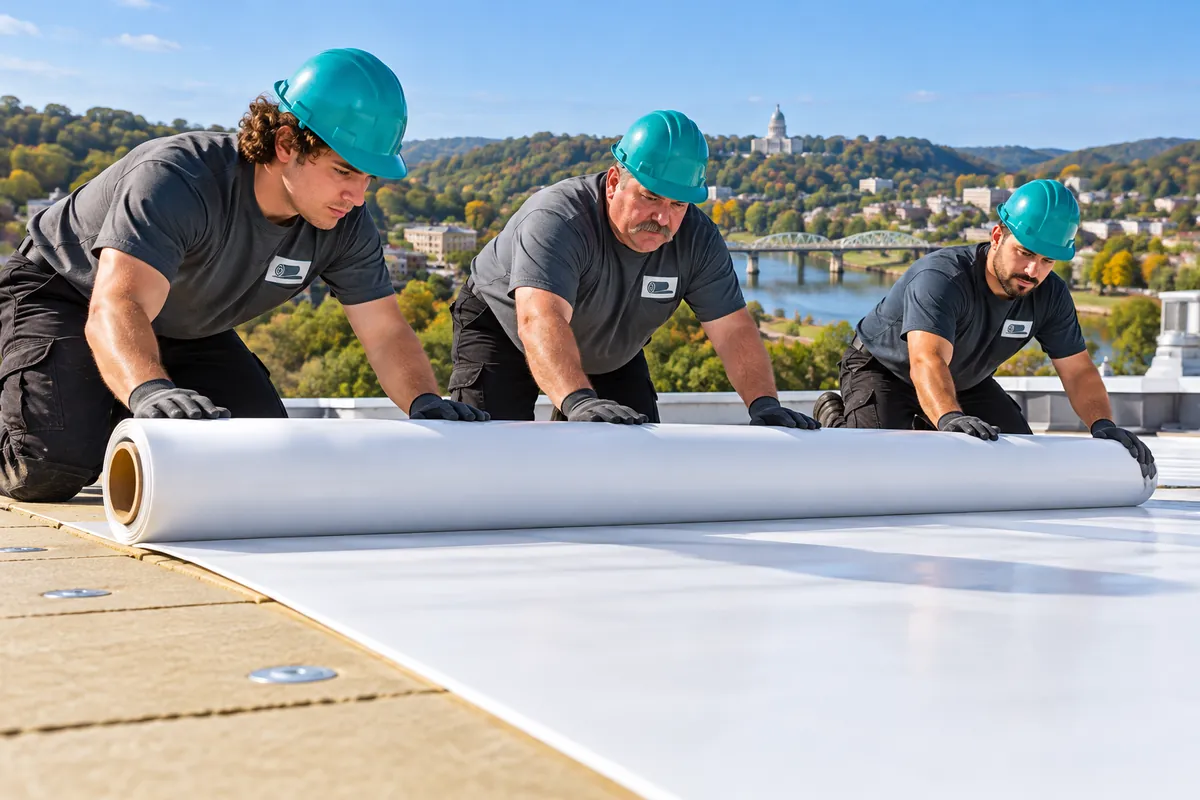
Many rebuilt flat roofs in Frankfort get a white TPO sheet welded over the new tapered board.
TPO Roofing in Frankfort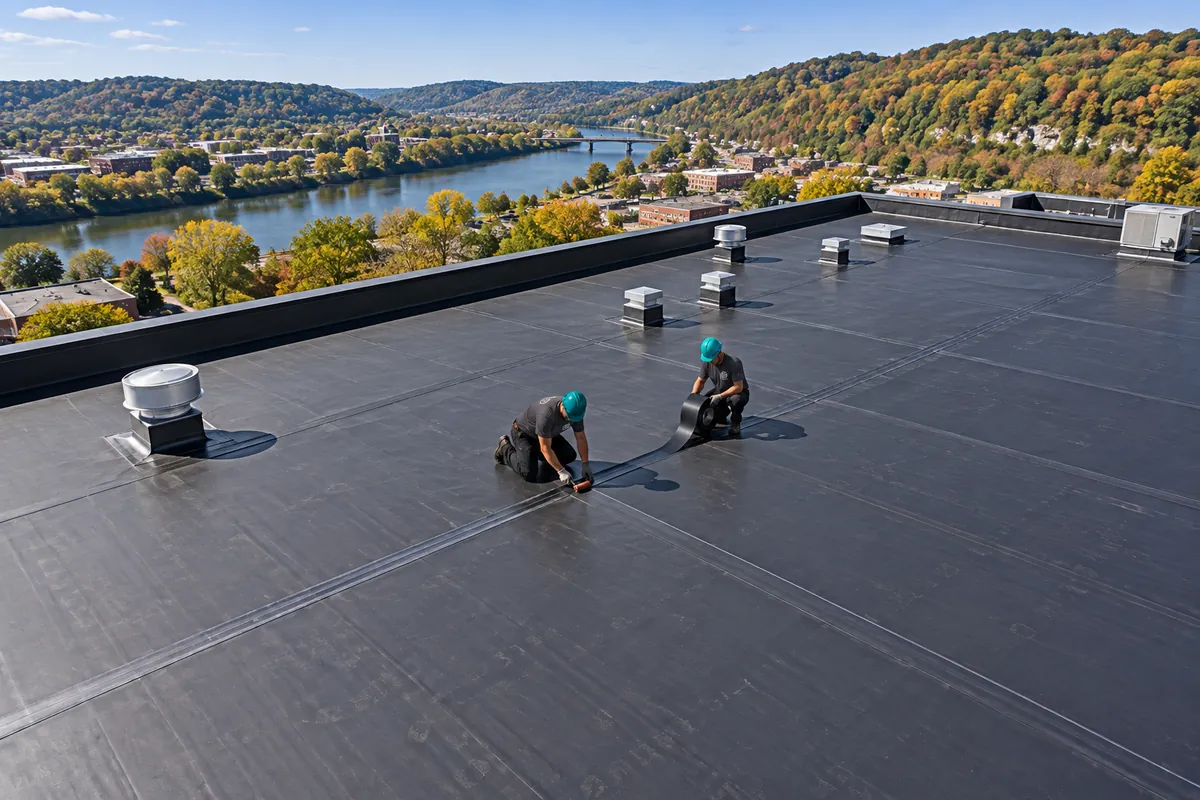
Rubber membrane suits low-slope roofs with complex layouts and many penetrations.
EPDM Roofing in Frankfort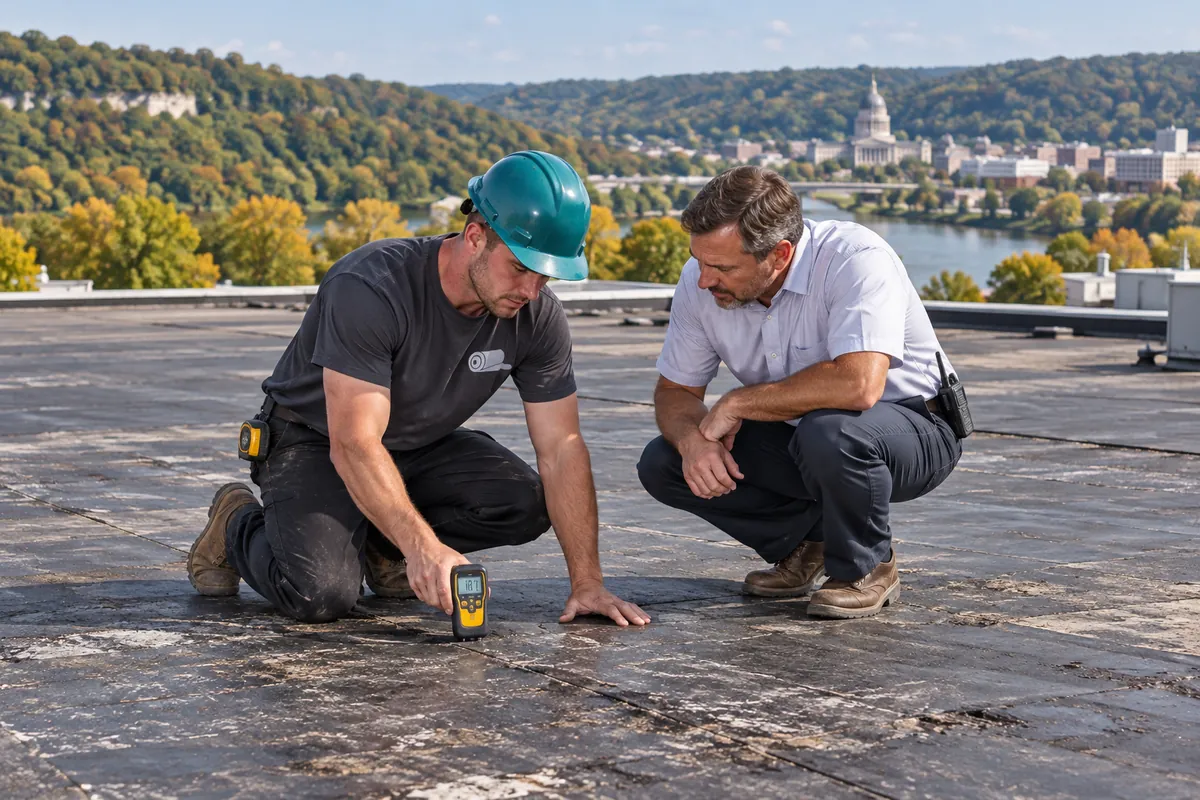
A flat roof with dry insulation and one leaking drain gets a targeted repair instead.
Commercial Roof Repair in FrankfortAnswers to the low-slope roof questions owners ask most.
Most ponding traces to drains set higher than the low spots around them. Raising the low areas with tapered insulation, adding crickets behind curbs, or lowering the drain sump fixes the slope, and it all goes under the new membrane during a replacement.
Polyiso boards made thicker at one edge than the other. Laid in a planned pattern, they give a flat structural deck a slope toward drains and scuppers. Crickets, small tapered pieces, push water around curbs and between drains.
Each has a place. Single-ply TPO, EPDM, or PVC covers most new low-slope roofs with wide sheets and fewer seams. Modified bitumen, with its granulated cap sheet, still suits roofs with heavy foot traffic. The building, its exhaust, and the deck decide.
Sometimes. A recover goes over the existing roof when the insulation is mostly dry and code limits on layers allow it. Wet board has to be cut out first, and the local inspector confirms whether a recover is allowed on your building.
Leaves and grit plug primary drains during heavy storms. An overflow scupper through the parapet gives water a second way off before it builds up, which protects the deck and the ceiling below.
Roof size, tear-off layers, and wet insulation drive most of it. Tapered insulation adds board and cutting, each curb and pipe needs hand-flashed detail, and edge metal is priced by the linear foot. A busy roof with many penetrations costs more per square foot than an open roof of the same size.
Tell us where water sits and how old the roof is. We will walk it and price the rebuild.
Want a Call Back About Your Roof?
Leave a name and number, or call (502) 300-9613 now.